
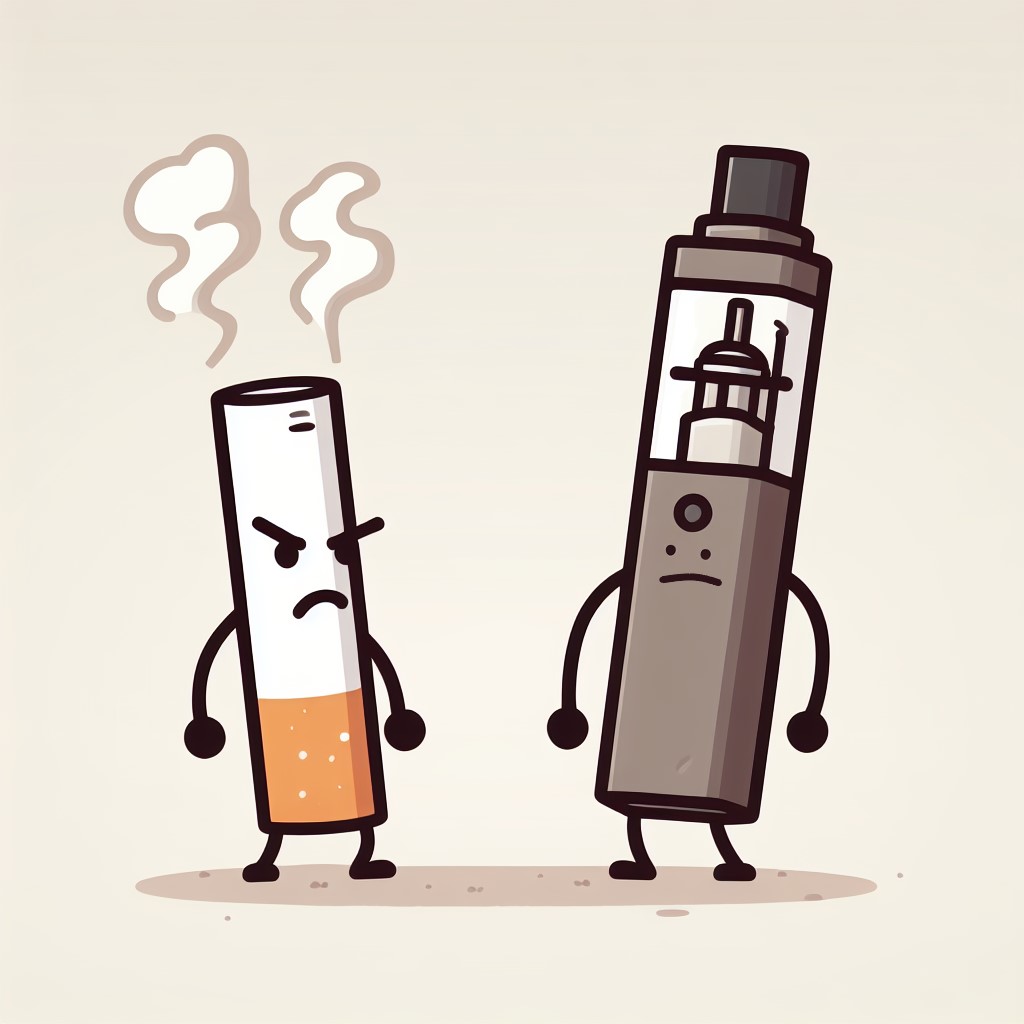
A Randomized Trial of E-Cigarettes versus Nicotine-Replacement Therapy
Background and Overview
It may be expected that switching from cigarette smoking to e-cigarette smoking would reduce health risks. A Cochrane review has shown that e-cigarettes containing nicotine are more effective for smoking cessation compared to nicotine-free e-cigarettes.
Tobacco is responsible for killing over 8 million people every year. Currently, the first line of therapies for tobacco cessation includes nicotine replacement therapy (NRT) and non-NRT. Bupropion and Varenicline are typical non-NRT therapies that can be used in conjunction with NRT.
Primary objective: compare the effectiveness of e-cigarettes and nicotine-replacement therapy in helping adults quit smoking.
- Journal: N Engl J Med
- DOI: 10.1056/NEJMoa1808779
- Funded by the National Institute for Health Research and Cancer Research UK and approved by the National Research Ethics Service
- The authors are affiliated with various institutions including Queen Mary University of London, King’s College London, London South Bank University, the University of York, Leicester City Council, and Roswell Park Comprehensive Cancer Center
Methods
Study Design
- Prospective RCT, multicenter
- Participants were randomly assigned to either nicotine-replacement products of their choice, including product combinations provided for up to 3 months, or an e-cigarette starter pack.
- Length of study: 52 weeks
Outcomes
Primary endpoint:
- Sustained abstinence for 1 year, which was validated biochemically at the final visit
Secondary endpoints:
- Participant-reported treatment usage and respiratory symptoms
- Abstinence between week 26 and week 52
- Abstinence at 4 weeks after target quit date
- Abstinence at 26 weeks after target quit date
Interventions
- Nicotine replacement products or an e-cigarette starter pack (including dose)
- Adherence
Oversight
Study Population
- Adults attending U.K. National Health Service stop-smoking services were randomly assigned to either nicotine-replacement products or an e-cigarette starter pack
- 2045 Clients of stop-smoking services were screened for eligibility
- 886 underwent randomization (439 to the e-cigarette group and 447 to the nicotine-replacement group)
Inclusion criteria
- Adult smokers, age >18 years
- No strong preference to use or not to use NRT or e-cigarettes
- Agreeable to signing a commitment to not use the non-assigned treatment for at least 4 weeks after their quit date
Exclusion criteria
- Pregnant or breastfeeding
- Current users of either e-cigarettes or NRT
Statistical Analysis
- A sample of 886 participants would provide the trial with 95% power if the true percentages of 1-year abstinence were 23.8% in the e-cigarette group and 14.0% in the nicotine replacement group
- A sample of 886 participants would provide 85% power if the percentages were 17.0% and 10.0% in the respective groups
- The primary and secondary abstinence outcomes were analyzed by regression of smoking status at each time point onto trial group
Results
Results of the study
- 1-year abstinence rate in e-cig group: 18%
- 1-year abstinence rate in NRT group: 9.9%
Important notes
- Abstinence was higher in the e-cigarette group at each of the check in dates
- Abstinence rates in the nicotine replacement group were also at least as high as in usual practice
- 22.2% of NRT arm participants reported using non-allocated EC
Safety
- Two participants died during the trial. One died from ischemic heart disease in the e-cigarette group and one from traumatic spine injury in the nicotine-replacement group
- There were 27 serious adverse events in the e-cigarette group and 22 in the NRT group
- More participants in the e-cigarette group than in the nicotine-replacement group reported respiratory serious adverse events, although the difference was not significant
- The results excluded participants who did not attend at least one behavioral support session, excluded participants who used the non-assigned product for at least 5 consecutive days, excluded participants who did not complete the 52-week follow-up
- No serious adverse event was related to product use as determined by trial clinician.
Discussion and Conclusion
Strengths/Limitations
- Strengths: The authors concluded that e-cigarettes were more effective for smoking cessation than nicotine-replacement therapy, when both products were accompanied by behavioral support
- Limitations: Small sample size did not meet 95% power, carbon monoxide validation detects smoking only over the past 24 hours, and some patients mixed products during the trial period (decreased intrinsic validity)
Conclusion
The use of E-cigarettes has a potential to reduce the number of cigarettes a person uses but can led to a new dependence on e-cigarettes. The dose of e-cigarettes cannot be measured as easily as NRT can, so it is hard to adequately compare the two. Furthermore, patients enrolled in this trial may be more motivated to quit than other patients.
Abstinence was self-reported and defined as smoking no more than five cigarettes after two weeks from the target quit date. The patient was provided with e-cigarettes and liquid at no charge, which may have contributed to their success in ceasing. The efficacy of e-cigarettes can also be because they fill the void left by not holding a cigarette. However, e-cigarettes may be seen as a replacement for smoking rather than a complete alternative for quitting smoking. Due to the lack of sufficient data on the long-term effects of e-cigarettes, it is not recommended to use them as a smoking cessation alternative.
Citation
Hajek P, Phillips-Waller A, Przulj D, et al. A Randomized Trial of E-Cigarettes versus Nicotine-Replacement Therapy. N Engl J Med. 2019;380(7):629-637. doi:10.1056/NEJMoa1808779
Glossary
- Carbon monoxide test: Exhaled carbon monoxide test is a tool to monitor smoking and help people to quit. The test can also show if you’re being exposed to dangerous levels of carbon monoxide in second-hand smoke, even if you don’t smoke yourself.
 Clinical Trials Digest
Leave a comment