
Author: Aaron

  • Intensive Blood Pressure Control in Type 2 Diabetes: BPROAD Trial Summary

    Intensive Blood Pressure Control in Type 2 Diabetes: BPROAD Trial Summary

    Background

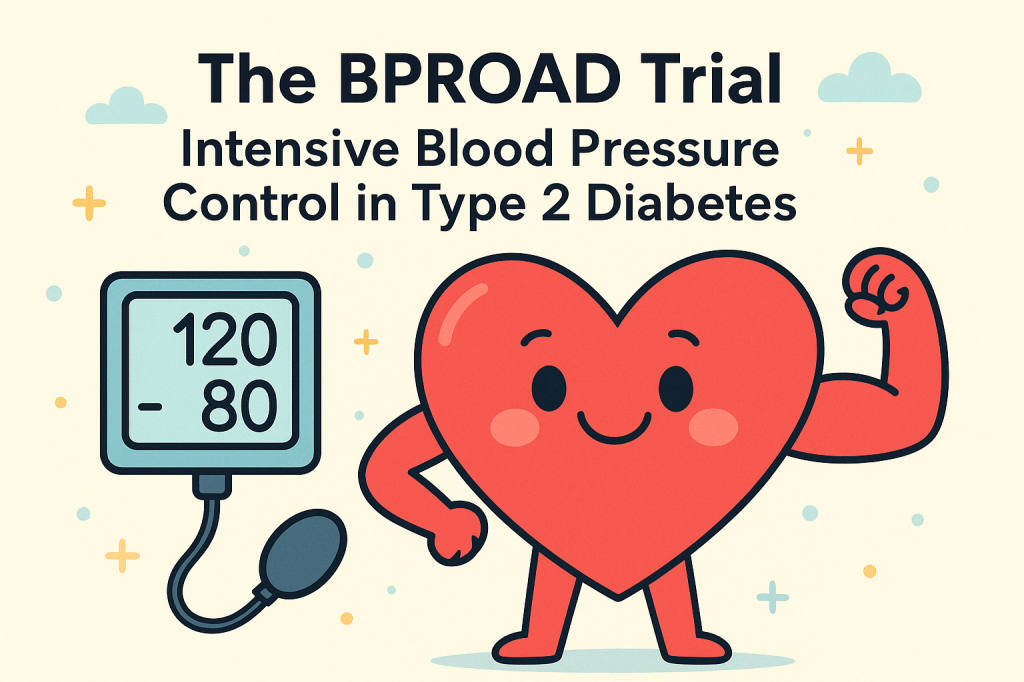
    Hypertension is the most modifiable cardiovascular risk factor in patients with type 2 diabetes. Yet, the ideal target for systolic blood pressure (SBP) remains a point of contention. Previous trials like ACCORD showed neutral findings for intensive BP lowering, whereas SPRINT—excluding patients with diabetes—showed clear benefits. The BPROAD trial aimed to resolve this uncertainty by evaluating whether targeting an SBP <120 mm Hg confers cardiovascular benefits over the standard <140 mm Hg in patients with type 2 diabetes.

    Study Design

    • Trial Name: BPROAD (Blood Pressure Control Target in Diabetes)
    • ClinicalTrials.gov: NCT03808311
    • Journal: New England Journal of Medicine, March 2025
    • Study Period: 2019–2021
    • Sites: 145 centers across China
    • Design: Randomized, open-label, blinded endpoint assessment
    • Duration: Median 4.2 years follow-up

    Inclusion Criteria

    • Age ≥50 years
    • Type 2 diabetes
    • Elevated SBP: 130–180 mm Hg (treated) or ≥140 mm Hg (untreated)
    • Increased cardiovascular risk (prior CVD, CKD, or multiple risk factors)

    Interventions

    • Intensive group: SBP target <120 mm Hg
    • Standard group: SBP target <140 mm Hg
    • Antihypertensive regimens titrated per protocolized algorithms

    Primary Outcome

    Composite of:

    • Nonfatal stroke
    • Nonfatal myocardial infarction
    • Hospitalization or treatment for heart failure
    • Cardiovascular death

    Key Findings

    Blood Pressure Control

    Time Point Intensive SBP (mean) Standard SBP (mean)
    1 year 121.6 mm Hg 133.2 mm Hg

    Cardiovascular Outcomes

    Outcome Intensive Group Standard Group Hazard Ratio (95% CI) p-value
    Primary composite endpoint 1.65/100 PY 2.09/100 PY 0.79 (0.69–0.90) <0.001
    Fatal or nonfatal stroke 1.19/100 PY 1.50/100 PY 0.79 (0.67–0.92)
    Heart failure hospitalization 0.13/100 PY 0.19/100 PY 0.66 (0.41–1.04)
    Cardiovascular death 0.24/100 PY 0.32/100 PY 0.76 (0.55–1.06)
    All-cause mortality 0.69/100 PY 0.73/100 PY 0.95 (0.77–1.17)

    PY = person-years

    Safety Outcomes

    Adverse Event Intensive Group Standard Group Notable Findings
    Serious AEs 36.5% 36.3% No significant difference
    Symptomatic hypotension 0.1% <0.1% Slightly more frequent in intensive arm
    Hyperkalemia (>5.5 mmol/L) 2.8% 2.0% Statistically significant (p = 0.003)

    Conclusions

    Intensive blood pressure control (target SBP <120 mm Hg) significantly reduced the incidence of major cardiovascular events compared to standard control (<140 mm Hg) in patients with T2DM. Benefits were consistent across subgroups and came without an overall increase in serious adverse events—though hypotension and hyperkalemia were more common with intensive therapy.

    Clinical Perspective

    • Reinforces a shift toward more intensive BP targets in diabetes, aligning with SPRINT’s findings in non-diabetic populations.
    • Impacts guideline interpretations, potentially challenging the legacy of JNC 8.
    • Clinical implementation should weigh cardiovascular benefits against potential risks like electrolyte abnormalities and orthostatic events, especially in frail or elderly populations.

    Reference

    Bi Y, Li M, Liu Y, et al. Intensive Blood-Pressure Control in Patients with Type 2 Diabetes. N Engl J Med. 2025;392(12):1155-1167. doi:10.1056/NEJMoa2412006(https://doi.org/10.1056/NEJMoa2412006)
  • Triple Hormone Receptor Agonist Retatrutide: Transforming Obesity Treatment

    Triple Hormone Receptor Agonist Retatrutide: Transforming Obesity Treatment

    Background

    Obesity, a burgeoning global health crisis, has long awaited breakthrough in its management. On June 26, 2023, the New England Journal of Medicine (NEJM) published a clinical trial that might just be the turning point in this fight. The study focused on retatrutide, a novel triple hormone receptor agonist, and its efficacy on obesity treatment. This comprehensive review delves into the details of the trial, its findings, and its potential implications for the future of obesity management.

    Understanding Retatrutide: A leap in Obesity Pharmacotherapy

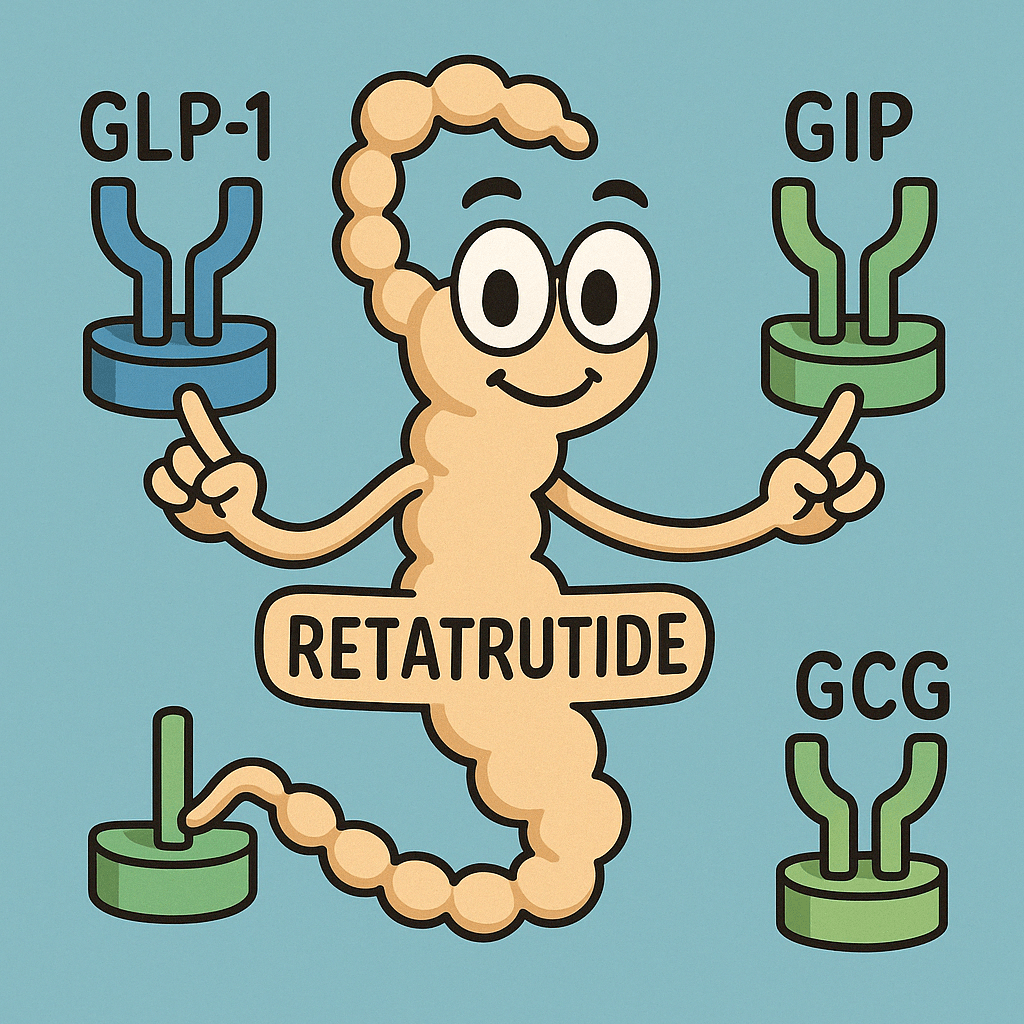
    Retatrutide represents a novel class of obesity treatment that works by simultaneously activating three different hormone receptors. Retatrutide targets glucagon-like peptide 1 (GLP-1), glucose-dependent insulinotropic polypeptide (GIP), and glucagon (GCG) receptors. In contrast, semaglutide (Wegovy®) solely targets GLP-1 and tirzepatide (Zepbound®) targets GIP in addition to GLP-1. It is postulated that, incorporating GCG receptor agonism may further enhance efficacy. This unique mechanism of action targets various aspects of obesity, including appetite regulation, energy expenditure, and glucose metabolism. The trial aimed to assess the effectiveness and safety of retatrutide in a phase 2 trial.

    The Clinical Trial: Design and Execution

    This phase 2 trial randomized, placebo-controlled, and featured a double-blind structure.

    • Participants were adults with a body mass index (BMI) of 30 or higher or who had a BMI of 27 plus at least one weight-related condition.
    • Primary end point was the efficacy of retatrutide in reducing body weight over 24 weeks.
    • Secondary end points included its impact from baseline to 48 weeks and various weight reduction parameters (percent weight reduction, changes in waist circumference and BMI).
    • Noteworthy exploratory end points included A1C, fasting blood glucose level, insulin and lipid levels, and blood pressure.

    Results

    Findings: Efficacy of Retatrutide in Weight Reduction

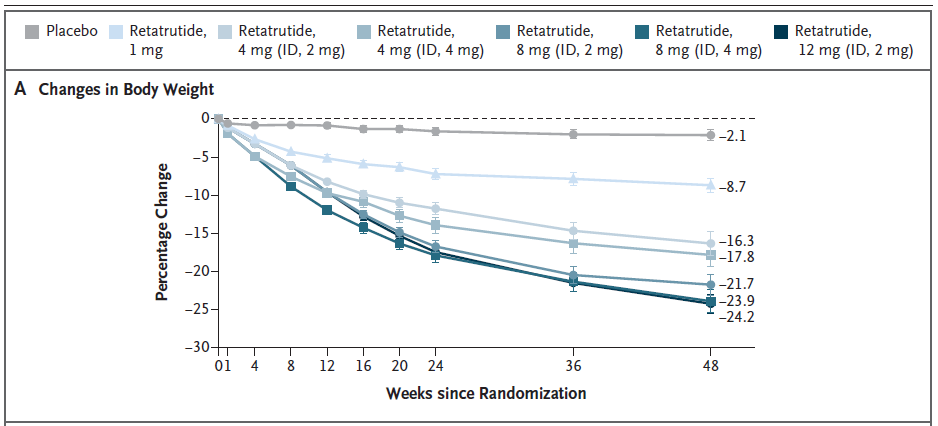
    The results were compelling. Participants receiving retatrutide showed a significant reduction in body weight compared to placebo. The weight loss was not only statistically significant but also clinically meaningful, as it was associated with improvements in various cardiovascular health markers, including blood pressure, lipid levels, and glycemic control.

    Participant Group
    By Dose
    Percent Change in
    Weight After 24 Weeks
    Percent Change in
    Weight After 48 Weeks
    Number of
    Participants
    Placebo-1.6%-2.1%70
    1 mg-7.2%-8.7%69
    4 mg; ID 2 mg-11.8%-16.3%33
    4 mg; ID 4 mg-13.9%-17.8%34
    8 mg; ID 2 mg-16.7%-21.7%35
    8 mg; ID 4 mg-17.9%-23.9%35
    12 mg; ID 2 mg-17.5%-24.2%62
    *ID = initial dose

    Safety Profile: Assessing the Risks

    A crucial aspect of any new medication is its safety profile. The trial reported that retatrutide was well-tolerated by most participants. While some experienced mild to moderate side effects, mostly gastrointestinal related, these were generally transient and manageable. This is encouraging for the potential widespread use of retatrutide.

    Adverse Effect (AE)Placebo1 mg4 mg; ID 2 mg4 mg; ID 4 mg8 mg; ID 2 mg8 mg; ID 4 mg12 mg; ID 2 mg
    Any AE during treatment49 (70%)58 (84%)24 (73%)28 (85%)28 (80%)33 (94%)57 (92%)
    Nausea8 (11%)10 (14%)6 (18%)12 (36%)6 (17%)21 (60%)28 (45%)
    Vomiting1 (1%)2 (3%)4 (12%)4 (12%)2 (6%)9 (26%)12 (19%)
    Diarrhea8 (11%)6 (9%)4 (12%)4 (12%)7 (20%)7 (20%)9 (15%)
    Constipation2 (3%)5 (7%)5 (15%)2 (6%)4 (11%)4 (11%)10 (16%)
    Antidrug ABs
    during treatment
    1 (1%)3 (4%)4 (12%)5 (16%)5 (16%)2 (6%)11 (18%)
    MDD
    or suicidal ideation
    1 (1%)000000
    Pancreatitis0000001 (2%)
    *ID = initial dose
    1 death (from drowning) was reported in the 4mg; ID 4 mg group. Determined to not be related to retatrutide.

    Implications for Obesity Treatment and Public Health

    The success of retatrutide in this trial is a significant stride in obesity treatment. Its ability to effectively reduce body weight and improve metabolic health could make it a key player in managing obesity. Numerous health issues are linked to obesity like diabetes, heart disease, and stroke. Moreover, this trial’s results could influence future research directions and healthcare policies, highlighting the importance of innovative approaches in tackling obesity and reducing further complications.

    Discussion and Conclusion

    Strengths/Limitations

    • Strengths: extended duration phase 2 trial, approximately equal percentages of men and women, adequate sample size to extrapolate the effects of treatment on cardiovascular risk measures, and 35% of the participants identified as Hispanic or Latino
    • Limitations: majority of the participants were White and the trial was limited geographically to the United States

    Citation

    Jastreboff AM, Kaplan LM, Frías JP, et al. Triple-Hormone-Receptor Agonist Retatrutide for Obesity – A Phase 2 Trial. N Engl J Med. 2023;389(6):514-526. doi:10.1056/NEJMoa2301972

  • Unveiling the Truth: E-Cigs vs Nicotine-Replacement Therapy

    Unveiling the Truth: E-Cigs vs Nicotine-Replacement Therapy

    A Randomized Trial of E-Cigarettes versus Nicotine-Replacement Therapy

    Background and Overview

    It may be expected that switching from cigarette smoking to e-cigarette smoking would reduce health risks. A Cochrane review has shown that e-cigarettes containing nicotine are more effective for smoking cessation compared to nicotine-free e-cigarettes.

    Tobacco is responsible for killing over 8 million people every year. Currently, the first line of therapies for tobacco cessation includes nicotine replacement therapy (NRT) and non-NRT. Bupropion and Varenicline are typical non-NRT therapies that can be used in conjunction with NRT.

    Primary objective: compare the effectiveness of e-cigarettes and nicotine-replacement therapy in helping adults quit smoking.

    • Journal: N Engl J Med
    • DOI: 10.1056/NEJMoa1808779
    • Funded by the National Institute for Health Research and Cancer Research UK and approved by the National Research Ethics Service
    • The authors are affiliated with various institutions including Queen Mary University of London, King’s College London, London South Bank University, the University of York, Leicester City Council, and Roswell Park Comprehensive Cancer Center

    Methods

    Study Design

    • Prospective RCT, multicenter
    • Participants were randomly assigned to either nicotine-replacement products of their choice, including product combinations provided for up to 3 months, or an e-cigarette starter pack.
    • Length of study: 52 weeks

    Outcomes

    Primary endpoint:

    • Sustained abstinence for 1 year, which was validated biochemically at the final visit

    Secondary endpoints:

    • Participant-reported treatment usage and respiratory symptoms
    • Abstinence between week 26 and week 52
    • Abstinence at 4 weeks after target quit date
    • Abstinence at 26 weeks after target quit date

    Interventions

    • Nicotine replacement products or an e-cigarette starter pack (including dose)
    • Adherence

    Oversight

    Study Population

    • Adults attending U.K. National Health Service stop-smoking services were randomly assigned to either nicotine-replacement products or an e-cigarette starter pack
    • 2045 Clients of stop-smoking services were screened for eligibility
    • 886 underwent randomization (439 to the e-cigarette group and 447 to the nicotine-replacement group)

    Inclusion criteria

    • Adult smokers, age >18 years
    • No strong preference to use or not to use NRT or e-cigarettes
    • Agreeable to signing a commitment to not use the non-assigned treatment for at least 4 weeks after their quit date

    Exclusion criteria

    • Pregnant or breastfeeding
    • Current users of either e-cigarettes or NRT

    Statistical Analysis

    • A sample of 886 participants would provide the trial with 95% power if the true percentages of 1-year abstinence were 23.8% in the e-cigarette group and 14.0% in the nicotine replacement group
    • A sample of 886 participants would provide 85% power if the percentages were 17.0% and 10.0% in the respective groups
    • The primary and secondary abstinence outcomes were analyzed by regression of smoking status at each time point onto trial group

    Results

    Results of the study

    • 1-year abstinence rate in e-cig group: 18%
    • 1-year abstinence rate in NRT group: 9.9%

    Important notes

    • Abstinence was higher in the e-cigarette group at each of the check in dates
    • Abstinence rates in the nicotine replacement group were also at least as high as in usual practice
    • 22.2% of NRT arm participants reported using non-allocated EC

    Safety

    • Two participants died during the trial. One died from ischemic heart disease in the e-cigarette group and one from traumatic spine injury in the nicotine-replacement group
    • There were 27 serious adverse events in the e-cigarette group and 22 in the NRT group
    • More participants in the e-cigarette group than in the nicotine-replacement group reported respiratory serious adverse events, although the difference was not significant
    • The results excluded participants who did not attend at least one behavioral support session, excluded participants who used the non-assigned product for at least 5 consecutive days, excluded participants who did not complete the 52-week follow-up
    • No serious adverse event was related to product use as determined by trial clinician.

    Discussion and Conclusion

    Strengths/Limitations

    • Strengths: The authors concluded that e-cigarettes were more effective for smoking cessation than nicotine-replacement therapy, when both products were accompanied by behavioral support
    • Limitations: Small sample size did not meet 95% power, carbon monoxide validation detects smoking only over the past 24 hours, and some patients mixed products during the trial period (decreased intrinsic validity)

    Conclusion

    The use of E-cigarettes has a potential to reduce the number of cigarettes a person uses but can led to a new dependence on e-cigarettes. The dose of e-cigarettes cannot be measured as easily as NRT can, so it is hard to adequately compare the two. Furthermore, patients enrolled in this trial may be more motivated to quit than other patients.

    Abstinence was self-reported and defined as smoking no more than five cigarettes after two weeks from the target quit date. The patient was provided with e-cigarettes and liquid at no charge, which may have contributed to their success in ceasing. The efficacy of e-cigarettes can also be because they fill the void left by not holding a cigarette. However, e-cigarettes may be seen as a replacement for smoking rather than a complete alternative for quitting smoking. Due to the lack of sufficient data on the long-term effects of e-cigarettes, it is not recommended to use them as a smoking cessation alternative.

    Citation

    Hajek P, Phillips-Waller A, Przulj D, et al. A Randomized Trial of E-Cigarettes versus Nicotine-Replacement Therapy. N Engl J Med. 2019;380(7):629-637. doi:10.1056/NEJMoa1808779

    Glossary

    1. Carbon monoxide test: Exhaled carbon monoxide test is a tool to monitor smoking and help people to quit. The test can also show if you’re being exposed to dangerous levels of carbon monoxide in second-hand smoke, even if you don’t smoke yourself.
  • EMPA-REG OUTCOME

    EMPA-REG OUTCOME

    Empagliflozin, Cardiovascular Outcomes, and Mortality in Type 2 Diabetes

    Background and Overview

    T2DM, is a chronic disease that affects millions of people worldwide. It is characterized by high blood glucose levels due to insulin resistance or insufficient insulin production. T2DM can lead to CVD, and in severe cases, it can result in death. There are two primary treatment options for T2DM: pharmacological and non-pharmacological interventions. Pharmacological treatments involve the use of medications such as metformin, other oral medications, and insulin. Non-pharmacological interventions, on the other hand, entail lifestyle modifications such as weight management, exercise, and diet. Despite the availability of these treatments, managing T2DM can be challenging, and I can attest to this fact.

    One promising approach that has emerged in recent years is the use of sodium-glucose cotransporter 2 (SGLT2) inhibitors. These inhibitors prevent glucose reabsorption in the kidneys, leading to glucose excretion in the urine and reduced blood glucose levels. The SGLT2 inhibitors have shown significant promise in managing T2DM, and they should be considered a viable treatment option for our patients.

    Researchers designed the EMPA-REG OUTCOME trial to examine the effects of empagliflozin on CV morbidity and mortality in patients with type 2 diabetes at high CV risk. The clinical question being asked by the study in PICO is:

    • In patients with T2DM at high CV risk (population), does the addition of empagliflozin (intervention) to standard care (comparison) reduce CV morbidity and mortality (outcome)?
    • Journal: N Engl J Med
    • DOI: 10.1056/NEJMoa1504720
    • Impact factor: The NEJM is a highly reputable journal with a significant impact factor.

    Methods

    Study Design

    • Type of study: Randomized control trial
    • Prospective vs. retrospective: Prospective
    • Location, duration: 590 sites in 42 countries, median observation time of 3.1 years
    • Blinding: Double-blind
    • Control: Placebo-controlled
    • Main analysis type: Intention-to-treat

    Outcomes

    • Primary endpoint: Composite of death from cardiovascular causes, nonfatal myocardial infarction, or nonfatal stroke
    • Secondary endpoint: Primary outcome plus hospitalization for unstable angina
    • Efficacy, safety, adverse events: Genital infection increased in the empagliflozin group, no increase in other adverse events

    Interventions

    • Study medications: Empagliflozin (10 mg or 25 mg) or placebo once daily
    • Ancillary treatments: Standard care for type 2 diabetes and cardiovascular risk factors

    Oversight

    • Study Population: N = 7020 patients treated
    • Experimental arm: n = 4687 patients
    • Placebo: n = 2333 patients

    Study Population

    • Recruitment: Adults with type 2 diabetes at high cardiovascular risk
    • Randomization method: Computer-generated random-sequence
    • Inclusion criteria: Type 2 diabetes, eGFR of at least 30 ml per minute per 1.73 m^2, established cardiovascular disease
    • Exclusion criteria: Specific glucose-lowering drugs, BMI of 45 or less

    Statistical Analysis

    • Power: At least 90%
    • Statistical tests used: Cox proportional-hazards model

    The author’s concluded that in patients with type 2 diabetes at high risk for cardiovascular events had a lower rate of primary composite cardiovascular outcome and death from any cause when empagliflozin was added to standard care.

    • Baseline characteristics: Similar across treatment and placebo groups
    • Comparison of treatment and control groups: Lower rates of the primary outcome in the empagliflozin group (10.5% vs. 12.1%, P = 0.04 for superiority)
    • Adverse events: Increased rate of genital infection but no increase in other adverse events

    Strengths/Limitations

    • Strengths: Well-designed RCT, large sample size, clear outcomes
    • Limitations: Limited to patients at high cardiovascular risk, short median observation time

    Conclusion

    • Interpretation of results: Empagliflozin shows promise in reducing cardiovascular morbidity and mortality in type 2 diabetes patients at high cardiovascular risk.
    • Bottom line: Empagliflozin may be a valuable addition to standard care for patients with type 2 diabetes at high cardiovascular risk.

    Zinman B, Wanner C, Lachin JM, et al. Empagliflozin, Cardiovascular Outcomes, and Mortality in Type 2 Diabetes. N Engl J Med. 2015;373(22):2117-2128. doi:10.1056/NEJMoa1504720

    Glossary

    • T2DM: Type 2 diabetes mellitus
    • Empagliflozin (Jardiance): Selective inhibitor of sodium glucose cotransporter 2
    • eGFR: Estimated glomerular filtration rate or a measure of renal function
    • Cox proportional-hazards model: A statistical method for survival analysis